Rethinking Affirmative Action for Muslims in India
Looking Ahead
The report closes with a six-point Action Agenda, urging policymakers to move beyond charity-based welfare toward justice-driven inclusion. USIPI is now working to amplify these recommendations through wider dissemination, policy dialogues, and civil society partnerships. The aim is to seed reforms that prioritize spatial targeting, occupational modernization, data transparency, and the establishment of Equal Opportunity Commissions—shifting the national discourse from welfare to rightful representation.
Identifying the Problem
Despite being the largest religious minority in India, Muslims remain significantly underrepresented in formal education, professional employment, and public institutions. Earlier efforts such as the Sachar and Misra Commissions documented these disparities—but the policy response since 2014 has largely shifted from structural reform to welfare delivery. As a result, systemic exclusion persists under a “charitable state” model that frames Muslims as recipients of aid, rather than rightful claimants to justice and opportunity.
USIPI’s strategic intervention
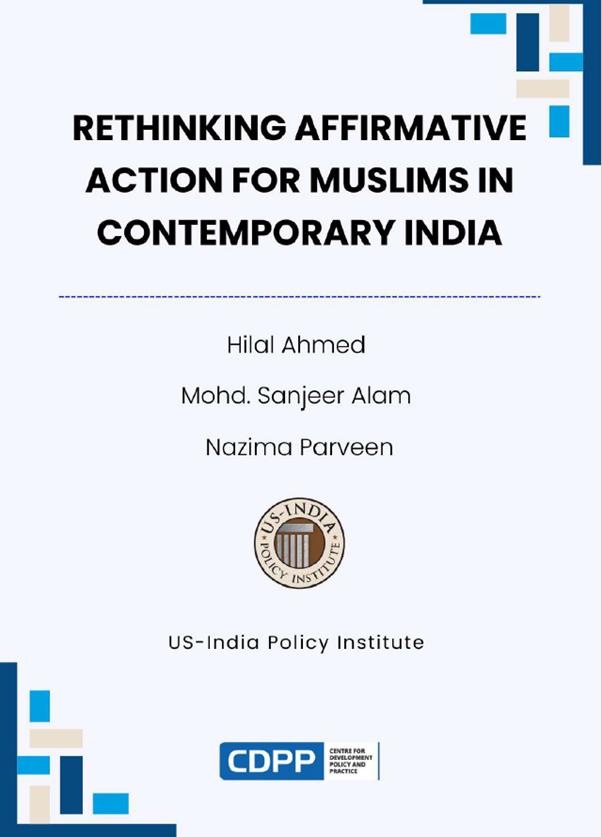
In 2025, USIPI published a landmark report - Rethinking Affirmative Action for Muslims in Contemporary India, authored by Hilal Ahmed, Sanjeer Alam, and Nazima Parveen. This evidence-based report calls for a fundamental rethinking of how inclusion is defined, measured, and implemented.
Key innovations include:
- A shift from religion-based quotas to spatial and sectoral targeting
- A six-point Action Agenda advocating for data reform, investment in Muslim-concentrated districts, occupational modernization, and the creation of an Equal Opportunity Commission
- Framing Muslim inclusion not as charity, but as a constitutional right to equal opportunity
The report proposes targeting Minority Concentration Districts (MCDs) and low-growth occupational sectors as proxies for exclusion—offering a politically viable and constitutionally aligned alternative to religion-based reservations.
Impact to date
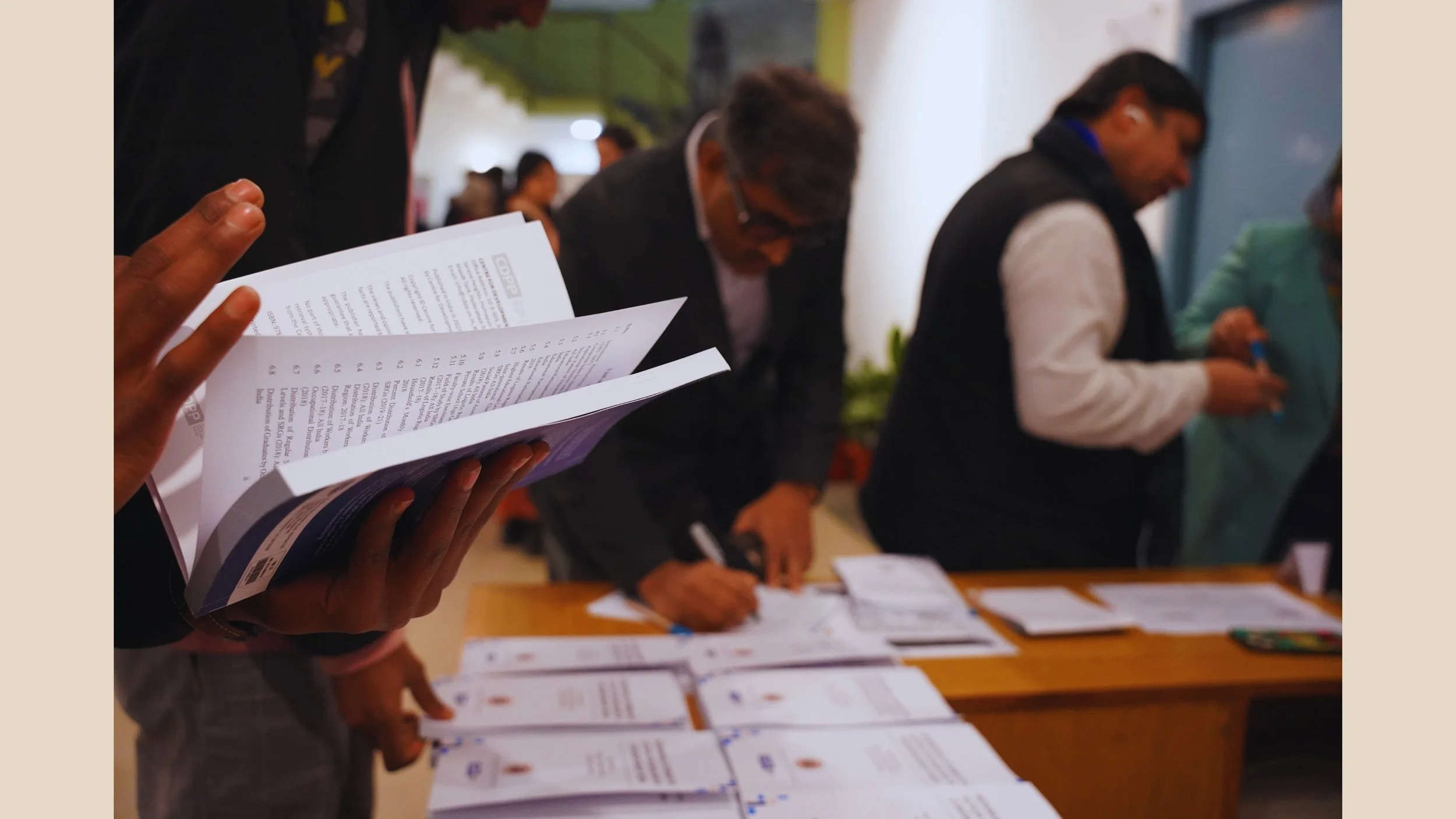
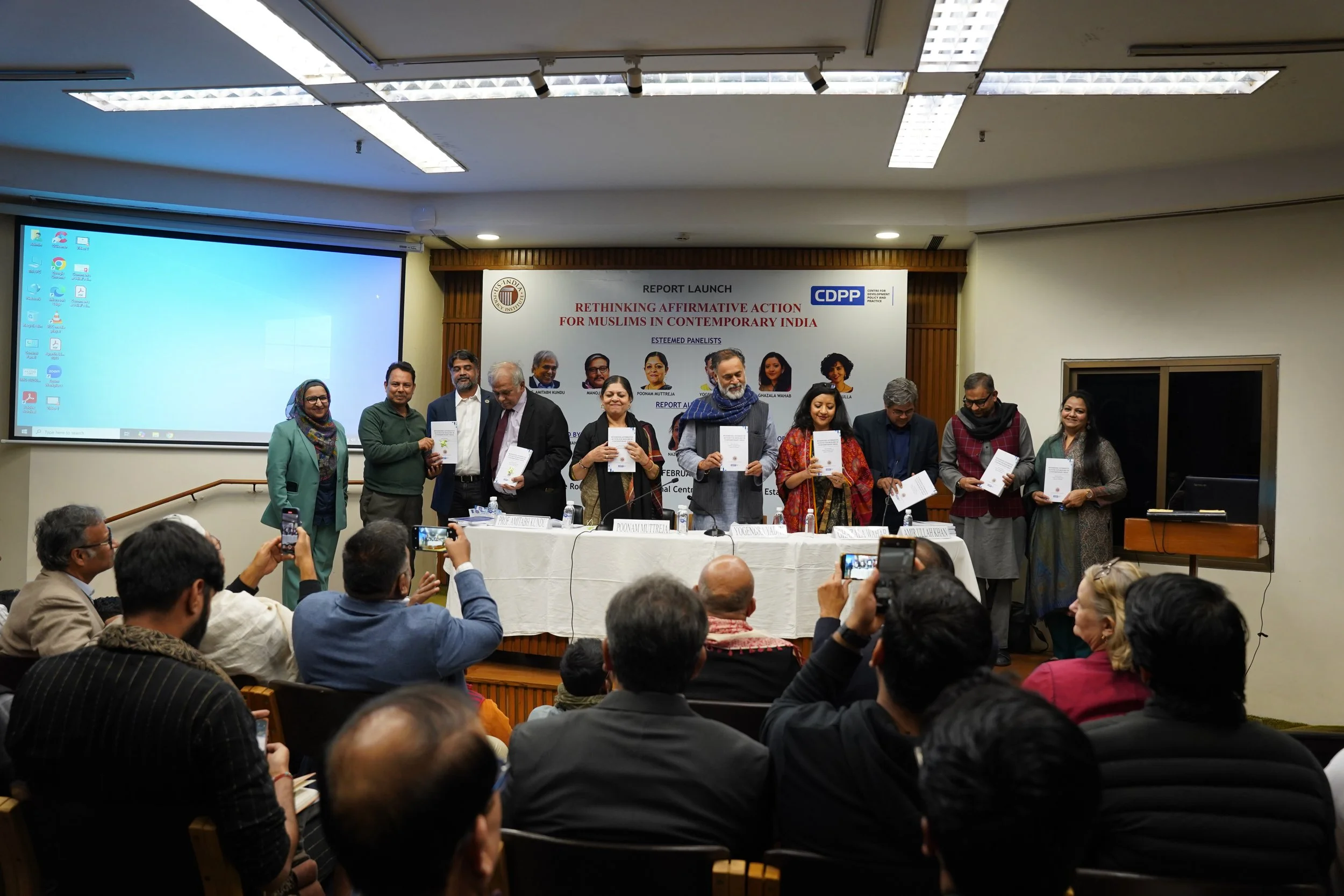
Launched in February 2025 at India International Centre, New Delhi
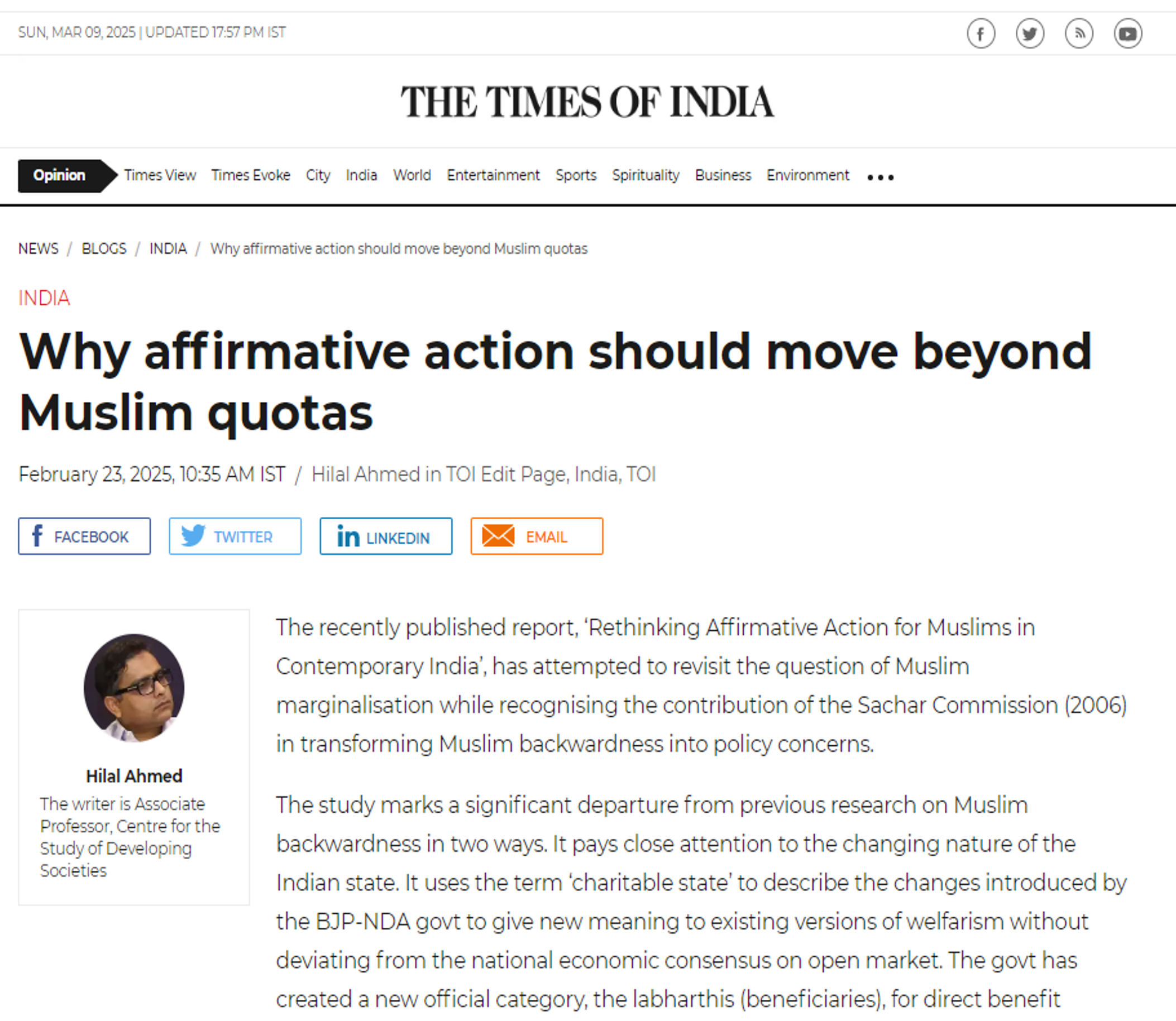
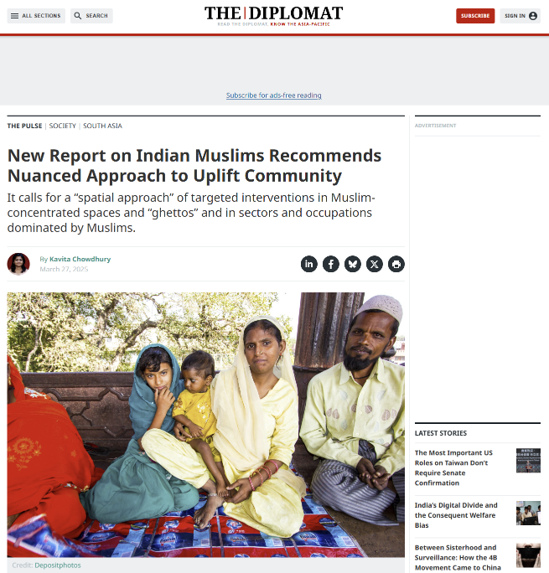
Widely covered across national and international media, including:
- The Times of India, Indian Express, The Diplomat, NewsClick, The Print, Islamic Voice, and Awaz The VoiceOp-eds and interviews by key thought leaders including Yogendra Yadav, Hilal Ahmed, and Ram Puniyani sparked national debate
Shared with policymakers, civil society coalitions, and philanthropic networks as a blueprint for inclusive reform
Informed strategic conversations in states like Karnataka, Jharkhand, and Kerala on educational investment and spatial equity.
The full report may be accessed here.